

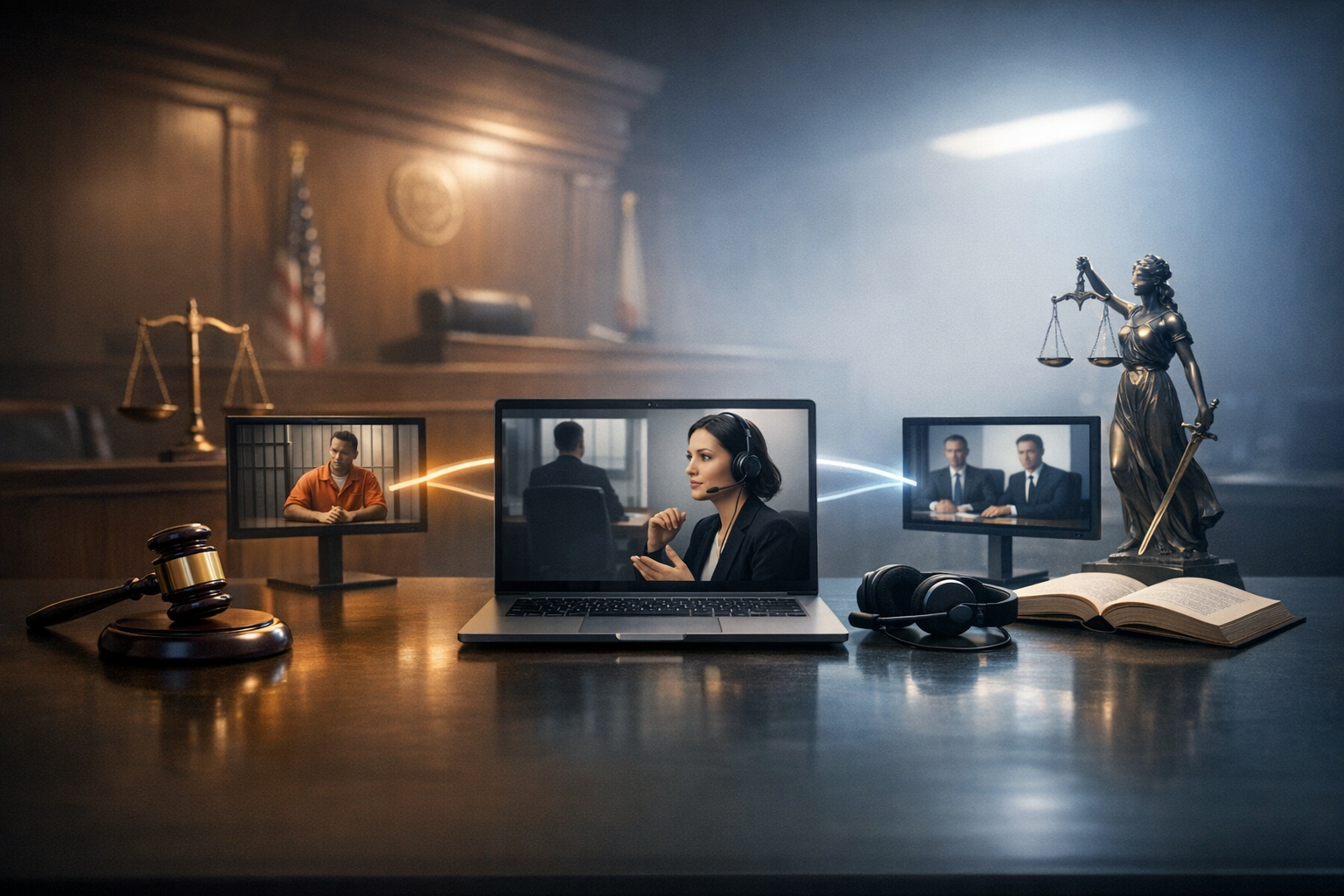
Legal settings increasingly rely on technology to ensure that everyone can fully understand and participate in proceedings, regardless of language barriers. Video Remote Interpreting, or VRI, has become a critical tool for courts, law firms, and legal departments that need immediate and accurate language support, without the logistical complexities of onsite interpreters. By connecting participants with qualified legal interpreters through secure video platforms, VRI helps keep cases moving efficiently while maintaining high standards of confidentiality and accuracy.
1. Understanding Video Remote Interpreting in Legal Contexts
Video Remote Interpreting is a real-time language solution that uses video conferencing technology to connect legal professionals, clients, witnesses, and interpreters. Instead of scheduling interpreters to be physically present, courts and law offices access them on demand through secure online platforms. This approach is especially valuable for urgent hearings, last-minute client meetings, and multilingual negotiations where time and accuracy are critical.
In legal proceedings, the stakes are high: miscommunication can affect case outcomes, client rights, and compliance with regulations. VRI bridges language gaps while allowing all participants to see facial expressions, gestures, and other visual cues that are often lost in audio-only interpreting. This visual layer strengthens clarity and reduces the risk of misunderstandings that might arise in complex legal discussions.
Law firms and courts often collaborate with a seasoned Turkish translation company or similar language service provider to guarantee that interpreters possess both linguistic and legal expertise. This combination ensures that terminology, procedures, and cultural nuances are handled with precision across all stages of a case.
2. The Technical Setup Behind Legal VRI Sessions
The foundation of Video Remote Interpreting for legal work is a secure, high-quality video platform. This environment must comply with privacy and data protection regulations, since attorneys, clients, and court personnel often discuss sensitive or confidential matters. Encrypted connections, controlled access, and session recording policies are usually part of the setup, depending on the court’s or firm’s internal rules.
Participants typically use laptops, tablets, or courtroom-installed equipment equipped with webcams and microphones. Interpreters connect from professional workstations with high-speed internet, quality headsets, and backup systems in place. The platform may integrate case identifiers, participant roles, and scheduling features, making it easier to manage multiple sessions throughout a busy legal calendar.
3. Step-by-Step: How a Legal VRI Session Works
The workflow for a Video Remote Interpreting session in a legal setting follows a clear, repeatable structure that keeps proceedings organized and efficient:
-
Initial request and scheduling
A court clerk, paralegal, or attorney submits a request specifying language pair, date, time, duration, and type of proceeding. The provider matches the case with an interpreter who has the right legal background, such as experience with criminal, civil, immigration, or corporate law.
-
Interpreter preparation
Once assigned, the interpreter receives available case materials and relevant terminology lists, subject to confidentiality rules. This may include pleadings, contracts, evidence summaries, or procedural guidelines so the interpreter is familiar with the case context in advance.
-
Secure login and identity verification
Before the session begins, all participants log into the secure platform. Depending on local regulations, the court or law firm may verify each participant’s identity and role. Interpreters confirm audio and video quality, and any technical issues are resolved before the proceeding starts.
-
Interpreter briefing and mode selection
The legal team briefly explains the nature of the proceeding, the parties involved, and any special requirements such as simultaneous or consecutive interpreting. Simultaneous interpreting is common for hearings, while consecutive interpreting is often used for client consultations and witness interviews.
-
Live interpretation during the proceeding
Throughout the session, the interpreter renders spoken content accurately and neutrally, following professional codes of ethics. The interpreter may request clarification from the speaker when needed, ensuring that every statement is fully understood before being interpreted into the target language.
-
Post-session follow-up
After the proceeding, the interpreter and legal team may briefly review any unresolved terminology issues or clarify next steps for upcoming hearings or meetings. Feedback is often collected to refine future sessions and improve the overall VRI process.
4. Key Benefits of VRI for Legal Proceedings
Video Remote Interpreting offers a range of advantages tailored to the demands of the legal sector. It allows faster scheduling, especially for rare language combinations or urgent matters such as emergency hearings, protective orders, and last-minute client consultations. Instead of waiting days or weeks for onsite interpreters, legal professionals can access qualified linguists within minutes or hours.
Cost efficiency is another major benefit. By reducing travel expenses, minimum call-out times, and logistical coordination, firms and courts can allocate budget more effectively across their caseload. VRI also expands access to justice by making it easier for limited English proficient individuals and non-native speakers to understand proceedings and participate fully in their defense or representation.
5. Ensuring Quality and Confidentiality in Legal VRI
Maintaining high standards in legal Video Remote Interpreting requires strict quality control. Interpreters must be professionally trained, experienced with legal terminology, and comfortable working in real time under pressure. Reputable language providers perform rigorous testing, continuing education, and performance evaluations to keep standards consistent across all sessions.
Confidentiality forms another cornerstone of effective VRI. Legal interpreters adhere to strict ethical guidelines that prohibit disclosure of privileged or sensitive information. In parallel, the technology platform must provide advanced security features, from encryption and password protection to carefully defined user permissions and, where required, audit trails.
6. When to Choose VRI Over Onsite or Phone Interpreting
While onsite interpreting remains useful for complex trials or lengthy proceedings, VRI is ideal when visual communication is important but physical presence is not strictly necessary. It offers more nuance than telephone interpreting, since participants can observe nonverbal cues, which are often crucial in cross-examinations, client interviews, and negotiations.
VRI is especially well-suited for short hearings, remote depositions, virtual mediations, and administrative procedures that involve participants in multiple locations. By combining flexibility, visual clarity, and professional interpreting, it helps legal practitioners maintain high-quality communication even in demanding, time-sensitive situations.
Conclusion
Video Remote Interpreting has evolved into an essential tool for modern legal practice, enabling courts and law firms to handle multilingual cases efficiently while preserving accuracy, confidentiality, and fairness. By connecting legal professionals with qualified interpreters through secure video platforms, language barriers become far less of an obstacle, even in urgent or complex matters. As technology and legal standards continue to develop, VRI will remain at the forefront of inclusive, accessible, and effective legal communication.